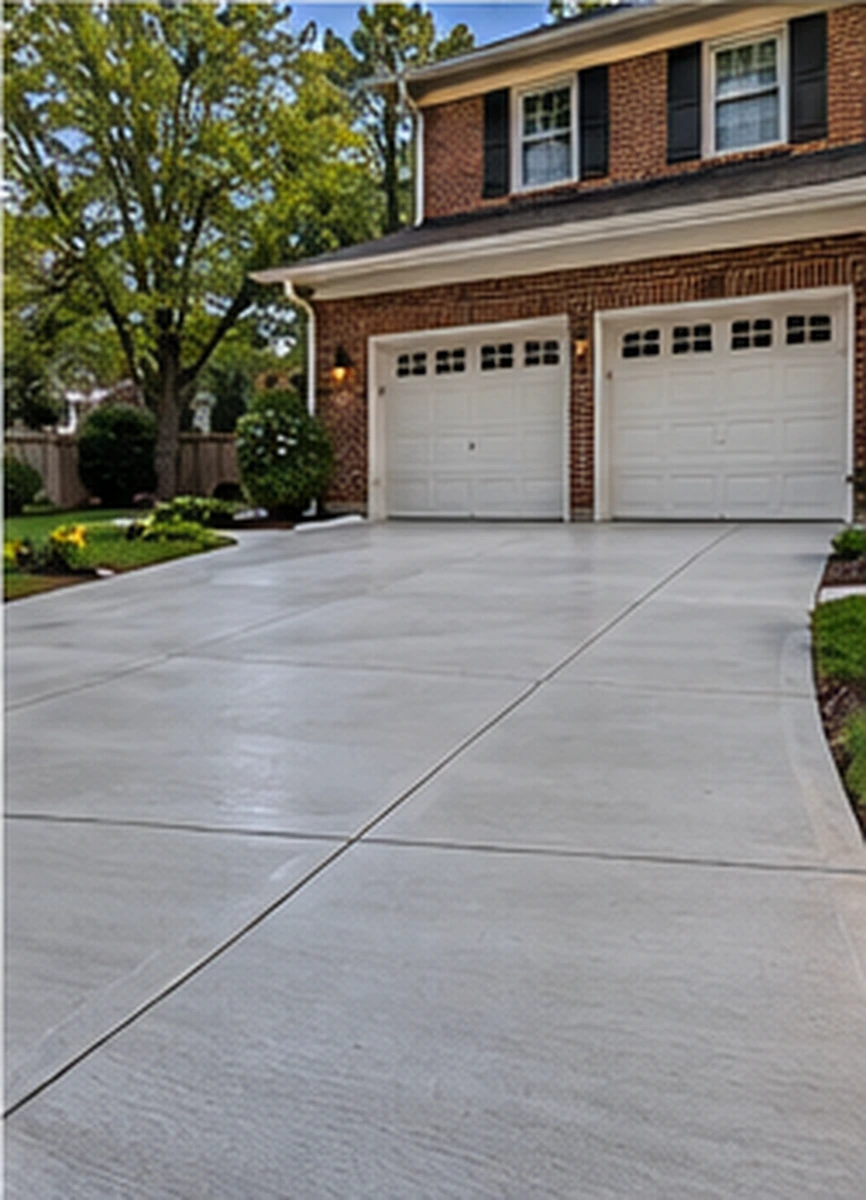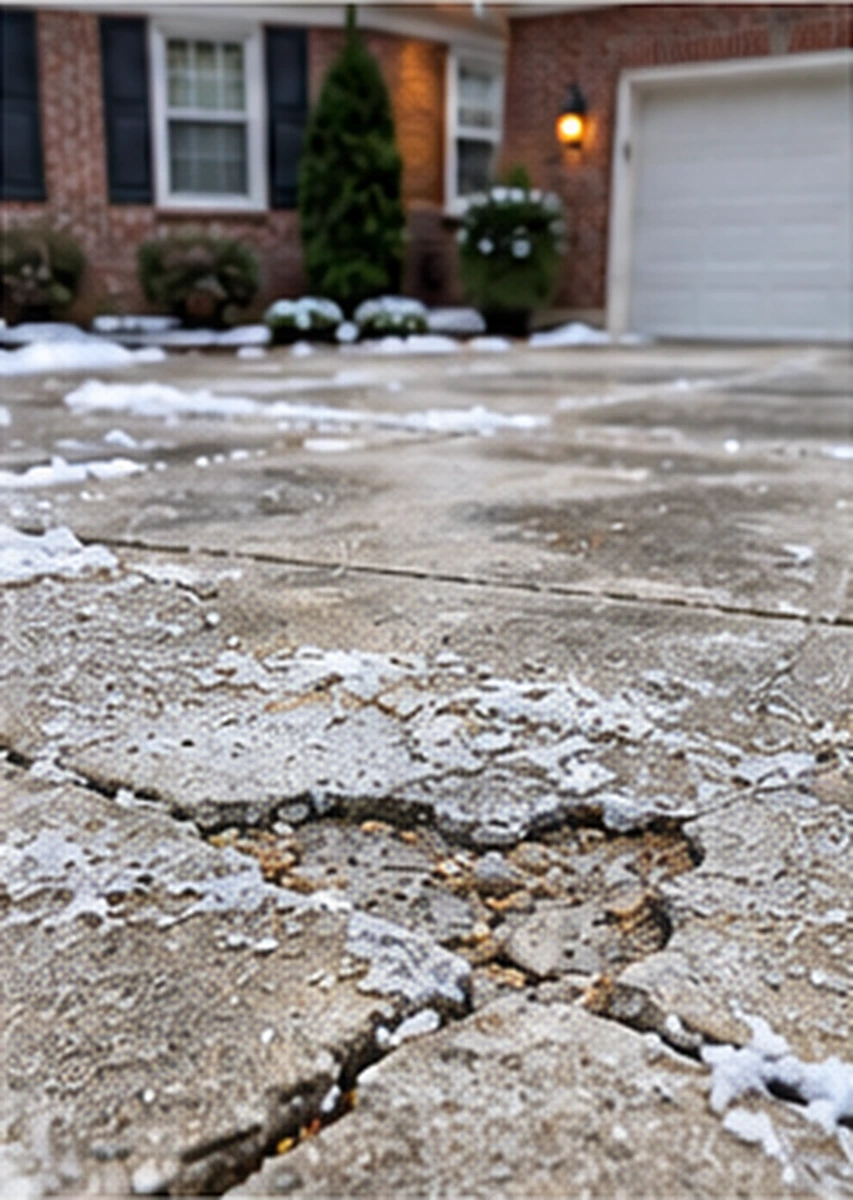
Winter weather in Silver Spring takes a massive toll on residential concrete. If you notice your driveway scaling, peeling, or cracking as spring arrives, you are dealing with the effects of the local freeze-thaw cycle.
Understanding how Maryland weather impacts your property helps you protect your investment. You can prevent costly damage before the next winter hits.
The Science of the Freeze-Thaw Cycle
Concrete feels completely solid, but it actually behaves like a rigid sponge. It contains microscopic pores and capillaries that naturally absorb moisture from Maryland's frequent winter rain and melting snow.
According to the American Concrete Institute, water expands by roughly 9% when it freezes into ice. When water trapped inside your driveway freezes, this expansion creates intense internal pressure.
[Moisture Seeps In] ---> [Temperature Drops] ---> [Water Expands 9%] ---> [Internal Pressure Cracks Surface]
When the temperature rises during a typical Silver Spring winter day, the ice melts and relieves the pressure. However, the next cold night repeats the process.
The National Ready Mixed Concrete Association warns that this continuous cycle eventually exceeds the tensile strength of the concrete. The result is scaling, flaking, and structural cracking.
Climate shapes everything about how concrete behaves over time. For a different perspective, the professional landscapers from Australia at Melbourne Greenworks explain how warmer, drier climates stress slabs through heat expansion and ground movement rather than freeze-thaw — a useful reminder that durable concrete always has to be engineered for the specific climate it lives in, and Silver Spring's is unmistakably a freeze-thaw climate.
The Hidden Danger of Retail Rock Salt
Many homeowners in Montgomery County try to clear their driveways quickly by spreading standard rock salt (sodium chloride) from the local hardware store. This actually accelerates the freeze-thaw damage.
Rock salt lowers the freezing point of water. This creates more frequent artificial freeze-thaw cycles on your driveway surface. Instead of freezing and thawing once a day, your concrete might experience the process four or five times a day.
Furthermore, sodium chloride attracts moisture. It draws extra water into the concrete pores, increasing the hydraulic pressure during the next freeze. This is not a problem unique to Maryland — Debut Marketing outlines in their blogs how a seasonally colder climate in Canada can impact concrete in much the same way, which is why proper deicing practices matter in any freeze-prone region.
The Portland Cement Association recommends avoiding chemical deicers altogether during the first winter after pouring new concrete. For older concrete, use clean sand for traction instead of corrosive salts.
Why Penetrating Sealers Are Mandatory for DMV Winters
The most effective way to protect your driveway from winter damage is to block water from entering the pores in the first place. Topical film-forming sealers can trap moisture underneath the surface, which causes the sealer to peel.
Instead, use a high-quality penetrating sealer. These products contain silanes or siloxanes. They penetrate deep into the concrete chemistry to create a hydrophobic barrier that repels water, oil, and salt.
The Concrete Reinforcing Steel Institute emphasizes that proper surface preparation and sealing extend the lifespan of exterior concrete pavements significantly. Apply a penetrating sealer every three to five years to keep your Silver Spring driveway intact through the toughest winters.
Want a Driveway Built to Survive Maryland Winters?
SiteDoctorMD pours commercial-grade, properly reinforced concrete driveways engineered for Silver Spring's freeze-thaw climate. Get a free, no-obligation estimate today.