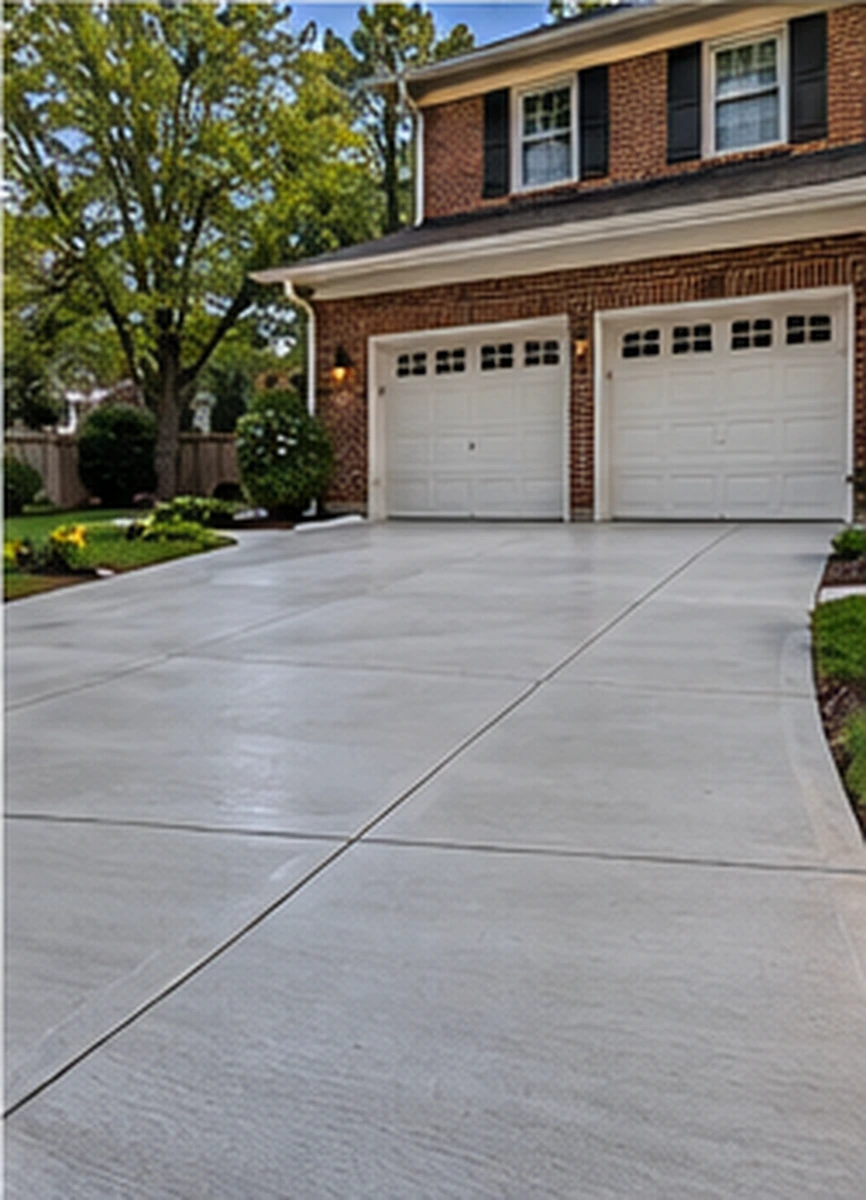
Plain gray concrete is durable, but it is not the only option. Colored concrete — whether integrally pigmented, dyed, or stained — lets a Maryland driveway, patio, or concrete pad match brick, stone, roofing, and landscaping instead of looking like a parking lot.
This guide explains the color methods, which ones survive Maryland’s freeze-thaw winters and humid summers, and how SiteDoctorMD installs colored concrete for homes and businesses across the state.
Three Ways to Color Concrete
1. Integral Color (Mixed In)
Mineral-oxide pigment is added to the concrete before it is poured, so the color runs through the entire slab. Chips and surface wear expose the same color rather than gray. For exterior driveways and pads, this is usually our first recommendation. Standards for these pigments are covered by ASTM C979.
2. Concrete Dyes
Dyes are fine-particle colorants applied to cured concrete. They produce vivid, uniform tones and dry quickly, but some are less UV-stable outdoors. They work well for accents, borders, and shaded areas, and always need a sealer on exterior work.
3. Acid and Water-Based Stains
Acid stains react chemically with the concrete to create mottled, variegated earth tones; water-based stains offer a wider palette with more predictable results. Both are popular for refreshing existing concrete without tearing it out.
| Method | Color depth | Best for |
|---|---|---|
| Integral color | Full slab | New driveways, pads, high-traffic areas |
| Dye | Surface | Accents, borders, shaded spaces |
| Stain | Surface (penetrating) | Refreshing existing concrete, patios |
Colored Concrete Services We Provide Across Maryland
- Colored concrete driveways — new or replacement driveways with integral color, optional contrasting borders, and saw-cut joints. See our concrete driveway installation service.
- Concrete pads — tinted pads for sheds, HVAC units, generators, hot tubs, and parking. Learn more about concrete pad installation.
- Colored and stamped patios — color pairs naturally with texture. Explore stamped concrete and concrete patios.
- Walkways and sidewalks — tinted sidewalks that tie the driveway to the front entry.
- Staining and resealing existing concrete — paired with concrete repair when the slab needs work first.
- Commercial colored concrete — entrances, plazas, and pads through our commercial concrete team.
Planning a Colored Driveway or Pad?
Get a free on-site estimate with color samples and a written scope from SiteDoctorMD.
Get Your Free QuoteBuilding Colored Concrete for Maryland Weather
Color is the finish; durability comes from what is underneath. Maryland sees repeated freeze-thaw cycles every winter, plus heavy summer storms on clay soils. Our installs focus on:
- Compacted, well-draining gravel base and correct slope away from the house
- Air-entrained concrete, which the Portland Cement Association recommends for freeze-thaw exposure
- Reinforcement and properly spaced control joints to manage cracking
- Consistent batching and finishing so color stays uniform across pours
- Proper curing and a compatible sealer for color depth and water resistance
For more on winter damage, read how freeze-thaw cycles damage driveways.
Choosing a Color That Works
- Match fixed materials — pull tones from brick, stone veneer, or roofing rather than siding paint that may change.
- Mid-tones hide wear — tans, buffs, and warm grays disguise tire marks and dirt better than very light or very dark colors.
- Darker colors run hotter — consider this for pool surrounds and patios used barefoot.
- Expect natural variation — concrete is not paint. Slight shading differences are normal and part of its character.
Always ask to see a cured sample: wet concrete looks darker than the finished color.
Caring for Colored Concrete
- Reseal on the schedule recommended for your sealer, typically every few years.
- Avoid rock salt; use sand for traction, especially during the first winter.
- Clean oil and leaf stains promptly to prevent discoloration.
- Use plastic snow shovel blades to avoid scratching the sealer.
Frequently Asked Questions
What is the difference between dyed, stained, and integrally colored concrete?
Integral color is mixed into the concrete at the plant, so the color runs through the full depth of the slab. Dyes and acid or water-based stains are applied to the surface after the concrete has cured. For exterior driveways and pads in Maryland, integral color is usually the most durable choice; dyes and stains are often used to add accents or to refresh existing concrete.
Will colored concrete fade in the Maryland sun?
Mineral-oxide integral pigments are UV-stable and resist fading well outdoors. Some solvent-based dyes are less UV-stable and are better suited to shaded or interior areas. A quality sealer, reapplied on schedule, also helps keep color rich.
Does colored concrete hold up to Maryland freeze-thaw winters?
Yes, when it is built correctly. Durability comes from the mix and installation — air-entrained concrete, a properly compacted base, control joints, and correct curing — not from the color. Color does not weaken a properly designed mix. Avoid rock salt deicers, especially the first winter.
Can you color an existing concrete driveway or pad?
Often, yes. Sound existing concrete can usually be cleaned, prepared, and colored with a penetrating stain or dye, then sealed. Concrete with heavy scaling, structural cracks, or settling typically needs repair or replacement first.
What areas of Maryland does SiteDoctorMD serve?
SiteDoctorMD is based in Silver Spring and serves homeowners and businesses across Maryland, with a focus on Montgomery County, Prince George’s County, and Howard County. Contact us to confirm availability for your address.
Get a Colored Concrete Quote Anywhere in Maryland
From dyed driveways to tinted shed and equipment pads, SiteDoctorMD builds colored concrete engineered for Maryland’s climate. Request your free, no-obligation estimate.